Article Body
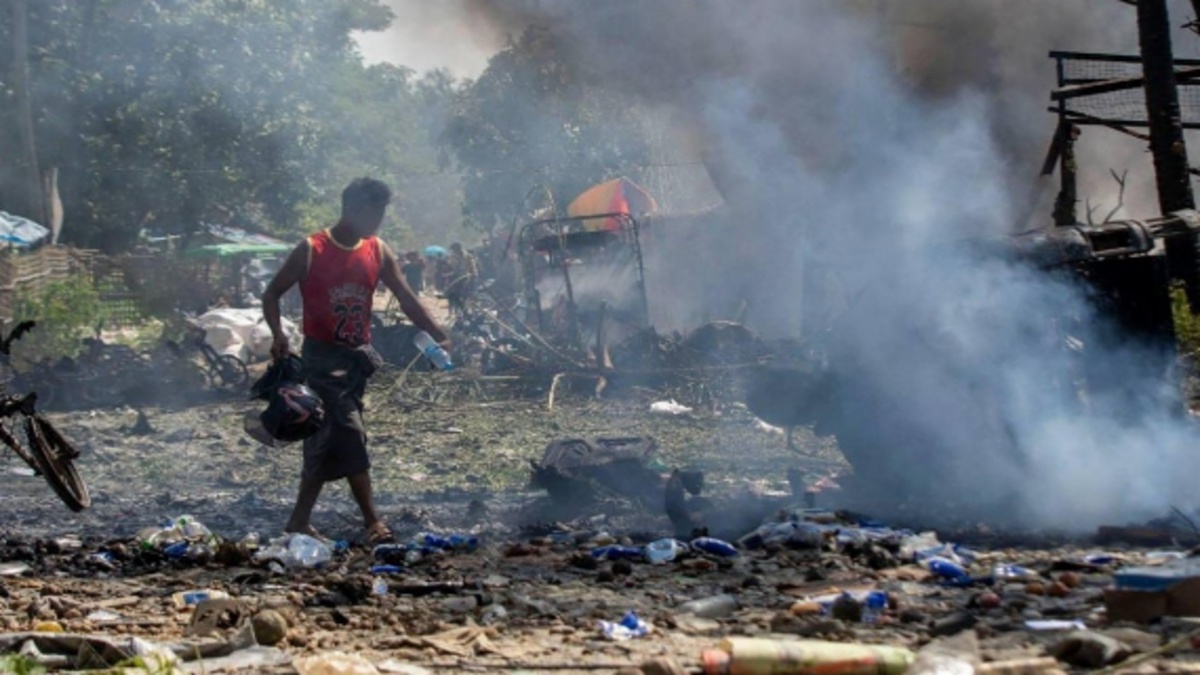
The latest Myanmar military airstrike in western Rakhine state has once again exposed the devastating human cost of the country’s prolonged civil war. At least 49 people were killed and 58 injured after an airstrike hit near a market in Kyauktaw township on September 28, according to the Arakan Army and local rescue officials.
The reported casualties are particularly disturbing because the strike occurred near a busy market, where vendors, shoppers and pedestrians were present. The Arakan Army said a fighter jet dropped two bombs around noon. The market reportedly serves as an important wholesale centre for the region, making it a crucial part of everyday civilian life.
The incident also demonstrates how Myanmar's conflict is increasingly affecting areas far beyond traditional battlefields. The military seized power in February 2021, triggering widespread resistance and an armed conflict involving pro-democracy forces and ethnic armed organisations. In Rakhine, the Arakan Army has captured much of the territory, including 14 of the state's 17 townships, according to reports.
From a humanitarian perspective, the continuing reliance on air power raises serious concerns. Rakhine is already facing displacement, food shortages and restrictions on trade routes. Nearly half a million people have been displaced in the state because of the conflict, according to United Nations figures cited by Al Jazeera.
The Myanmar military has previously maintained that its operations target legitimate military objectives, while the Arakan Army has condemned the latest attack and threatened retaliation.
The Kyauktaw tragedy therefore should not be viewed as an isolated incident. It is another reminder that Myanmar's conflict continues to place civilians at enormous risk. Any meaningful path towards stability will require greater protection for civilians and sustained efforts to address the country's widening humanitarian crisis.

Comments