Article Body
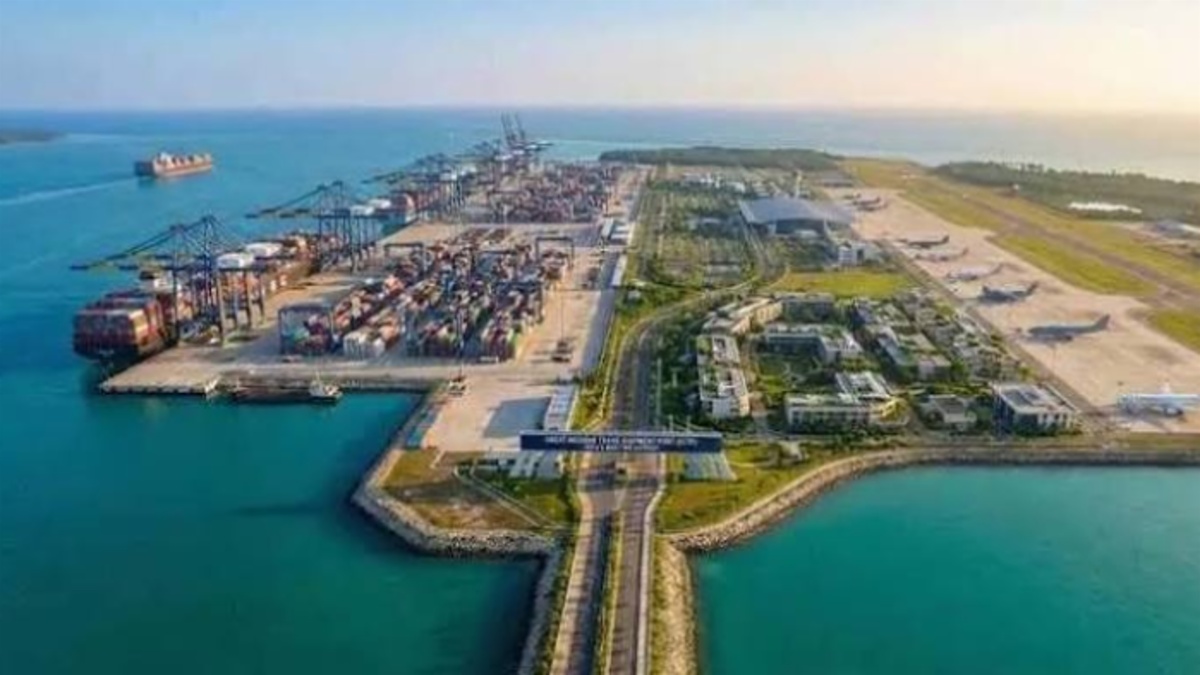
The Great Nicobar Project represents one of India’s most consequential attempts to combine maritime strategy, infrastructure development and ecological management. Located close to the Malacca Strait and only about 40 nautical miles from the East-West international shipping route, Great Nicobar has an unusual strategic value. The government’s plan includes a 14.2-million-TEU International Container Transshipment Terminal, an international airport, a power plant and a new township.
For India, the economic argument is straightforward. A major transshipment facility at Galathea Bay could reduce dependence on foreign hubs such as Colombo, Singapore and Port Klang, while placing India closer to one of the world’s most important maritime trade corridors. The location also has obvious significance for India’s wider presence in the Andaman Sea and the Indo-Pacific.
But strategic geography cannot erase ecological geography.
The project involves diversion of 130.75 square kilometres of forest, while government figures indicate that up to 7.11 lakh trees could eventually be felled across 49.86 square kilometres. The tree removal is planned in phases between 2025 and 2047, while 65.99 square kilometres is designated as a no-tree-felling green area.
This is where the debate becomes more complicated. Great Nicobar is not simply unused land waiting for infrastructure. It contains highly sensitive forests and marine ecosystems, including habitat associated with the giant leatherback turtle. The island is also home to the Shompen and Nicobarese communities, making questions of indigenous rights and cultural protection central to the development debate.
The government says the project has received environmental clearance with 42 specific conditions, alongside monitoring committees for pollution, biodiversity and tribal welfare. It also says no displacement of Shompen or Nicobarese communities is proposed.
Yet environmental compensation on paper is not the same as ecological equivalence on the ground. Planting forests elsewhere cannot perfectly recreate an ancient island ecosystem, while compensatory measures cannot automatically replace lost habitat or disrupted ecological relationships.
The real test, therefore, is not whether India should develop Great Nicobar, but how development is carried out. Infrastructure will have to coexist with strict biodiversity monitoring, protection of turtle nesting areas, meaningful safeguards for indigenous communities and transparent compliance with environmental conditions.
Great Nicobar can become an important maritime gateway for India. But its success should ultimately be measured not merely in port capacity, cargo volumes or strategic reach. The larger achievement would be proving that geopolitical ambition and ecological responsibility do not have to be mutually exclusive.

Comments